
Maximise value and minimise costs: essential strategies for optimising freight procurement
Essential strategies for freight procurement that cut cost while raising service quality for European shippers and logistics buyers alike.
Read article
Too much stock ties up capital, too little stops production. These 11 practices help balance procurement flow and inventory levels.
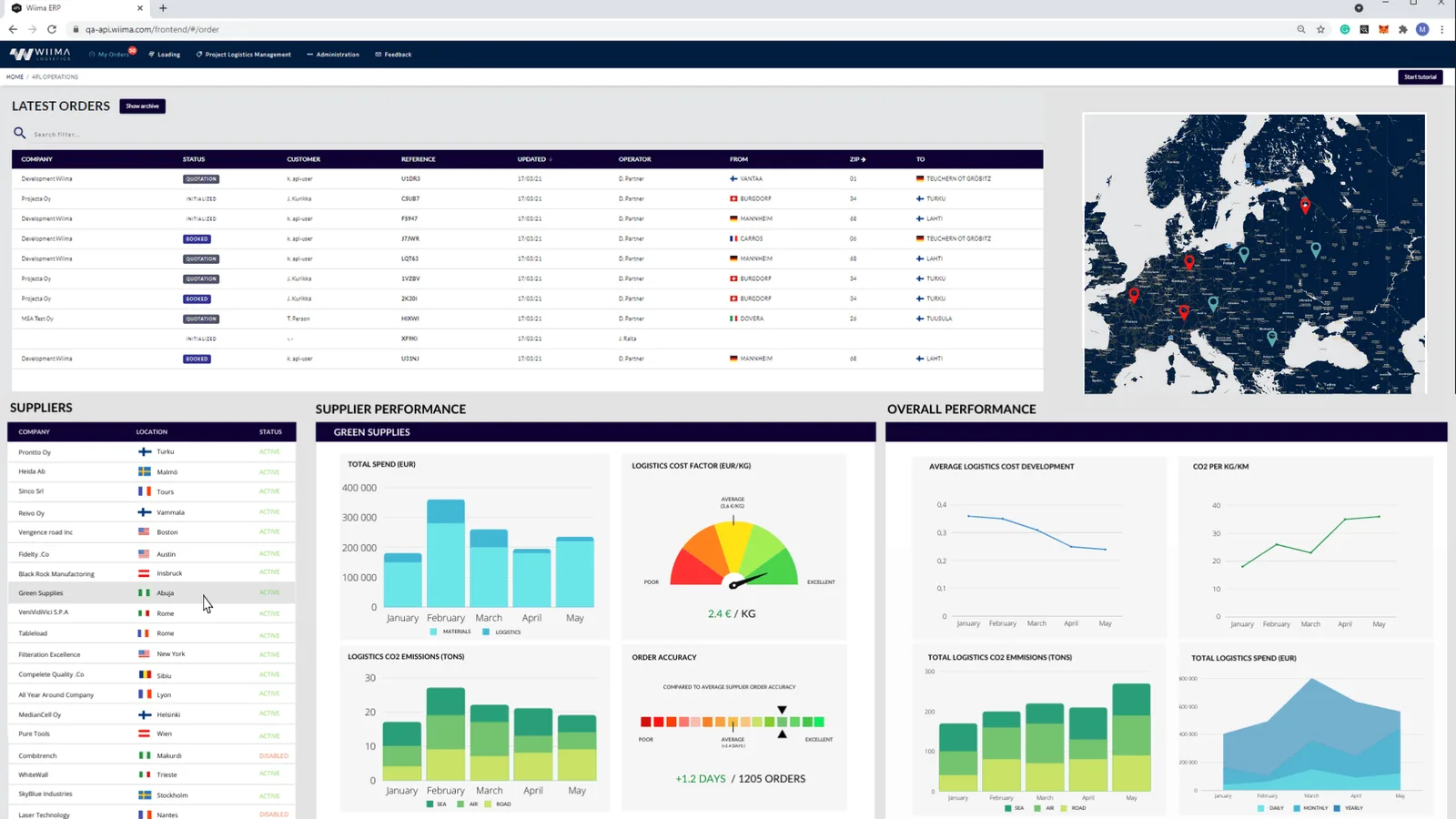
Effective procurement and warehouse inventory management decide whether you pay for idle stock or for a stoppage.
You need a view of demand and supply. Sales trends, buying patterns and seasonality tell you when to order and how much. Use that history before you change order quantities.
Cloud inventory systems can record stock and raise orders without a manual spreadsheet. That reduces typing errors and keeps the record closer to the shelf. The same stack should cover warehouse counts; there is no need for a second “automation project” with the same purpose.
Just-in-time (JIT) means ordering so that stock arrives when it is needed, rather than holding a large buffer as the default. Holding cost and ageing fall if suppliers and lead times are reliable. JIT is a poor fit if inbound is unstable and you have not built safety stock for that risk.
When you apply JIT in a warehouse:
To save money and reduce costs associated with overstocking, businesses should optimise their purchasing strategies. Balance volume discounts against holding costs; use framework agreements to secure prices without overstocking.
Safety stock is a reserve against delay or a demand spike. Size it from real variability, then review it. Extra buffer costs money.
Physical automation — conveyors, goods-to-person, pick-to-light — is a different decision from inventory software. Use it where labour is scarce and the process is stable enough to justify the capital. It should follow a trusted stock record, not replace one.
Compare physical counts with the system. Gaps are how stockouts and silent overstock start. Audit enough to trust the numbers you plan on.
Procurement, warehouse and the functions that consume stock need the same picture of on-hand quantity, open orders and delivery dates.
Watch quality, on-time receipt and price together. Regular reviews make it possible to act before a weak supplier becomes a stockout.
Check goods on receipt so damaged or off-spec product does not enter available stock. That reduces waste, returns and false inventory.
Freight is part of inventory cost. Consolidation and negotiated carrier rates often save more than shaving a purchase price that then needs an urgent extra shipment.
These practices work when they are adapted as demand, lead times and suppliers change. If you want a structured look at where inventory ties up capital, contact us. Our consultants can run a procurement-flow review.
Tell us about your situation — we will look together at which model could fit you.
Essential strategies for freight procurement that cut cost while raising service quality for European shippers and logistics buyers alike.
Read article
Automation cut our booking time from 10–15 minutes to about two – but the real win was simplicity. Jussi Laaksonen on what that change taught Wiima.
Read article
One carrier or several? Your procurement strategy affects price, risk and workload. Here's how to choose between exclusive sourcing and multi-sourcing.
Read article