Open a region to see what makes the work demanding and how Wiima supports execution.
Ship modernisation – Europe
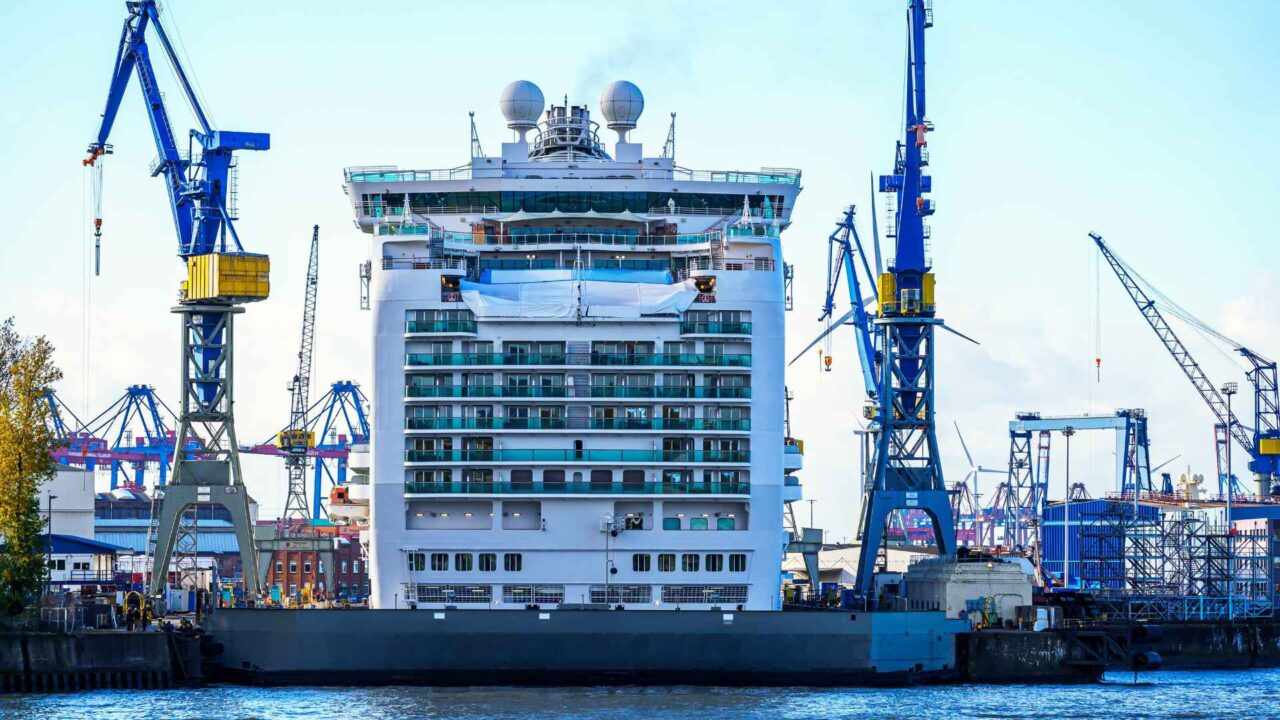
Ship modernisation projects in Europe — whether in Cádiz, Marseille, Brest, Palermo or elsewhere — leave little margin for error. Timelines are tight, customs procedures are case-specific, and every delay has a cost.
What makes modernisation projects so demanding?
Ultra-tight timelines
Delays of even a few hours can trigger cascading costs and complications.
Complex supply chain coordination
Shipments must be scheduled carefully against production and site readiness, often combining several modes of transport.
Customs complexities
Special import/export rules for refurbished components must be accounted for in advance.
How Wiima delivers value in European refits
A complete logistics solution tailored to ship modernisation — enhanced with Projector for clearer control:
- Full project planning, routing, scheduling and budgeting
- Storage and consolidation of parts before yard delivery
- Repacking, documentation and compliance management
- Freight coordination including urgent, over-the-weekend moves
- On-site logistics personnel, if needed
- Return logistics and customs handling after the project
- Projector: shipment tracking, inventory overviews and smart alerting
Why customers work with Wiima
- Reduced logistics overhead
- Fewer delays and unplanned costs
- Transparent, data-backed coordination
- One point of contact for the entire logistics scope
A real example: delivering under pressure
In a recent European refit, a critical shipment was needed within 24 hours — a full truckload across borders where delays were not an option. Wiima arranged 24/7 nonstop transport using special routing permissions, delivering on time and helping avoid costly project stoppages.
How European refits compare globally
Compared with APAC or the Caribbean, modernisation projects in Europe benefit from more structured infrastructure and regulatory predictability — but still demand tight local coordination. Customs procedures vary by country. Wiima’s local partners and route knowledge help make the difference.
Ship modernisation – US & Caribbean
Modernisation projects in the US and Caribbean — including locations like Freeport and key Florida yards — run on compressed schedules. Every shipment must align with narrow delivery windows and tight yard access plans.
What makes modernisation projects so demanding?
Extreme time pressure
Refit schedules are tight and costly to overrun.
Challenging transport logistics
Coordinating shipments that combine several transport modes in a global supply chain requires precise timing.
Region-specific customs
US and island-based shipyards often have unique customs models that require early planning.
How Wiima delivers value in US & Caribbean refits
Logistics tailored for ship refurbishments — supported by Projector for end-to-end transparency:
- Project-level routing, budgeting and supplier alignment
- Pre-shipment warehousing and consolidation into efficient units
- Established partner network in the US & Caribbean
- Documentation and customs coordination tailored to regional needs
- Time-critical freight handling and urgent shipments
- On-site logistics coordination, if required
- Return flow management and compliance reporting
- Projector connecting shipments, tasks and documents in real time
Why customers work with Wiima
- Streamlined logistics process
- High schedule reliability
- Transparent operations
- Less need to allocate internal logistics resources
A real example: solving for the unexpected
In a recent Caribbean modernisation project, Wiima organised a last-minute charter sea shipment from Europe — arranged within one week — that secured the project timeline. An air charter would have cost multiple times more.
How US & Caribbean refits compare globally
Compared with European shipyards, US and Caribbean modernisations can pose challenges in routing flexibility and customs clearance speed. Local infrastructure varies, and delivery coordination often needs more hands-on oversight. Wiima’s regional partners help bridge these gaps.
Ship modernisation – APAC
Ship modernisation projects in the Asia-Pacific region are often logistically complex. Long-distance supply chains, multi-supplier coordination and customs variation between countries such as Singapore, China and South Korea demand careful execution.
What makes modernisation projects so demanding?
Fragmented supplier networks
Projects often involve multiple vendors across different APAC countries.
Time zone and communication gaps
Delays can arise from poor alignment and response lag across regions.
Varying customs protocols
Cross-border refurbishment shipments require proactive documentation and clearance planning.
How Wiima delivers value in APAC refits
A unified logistics solution for Asia-Pacific ship modernisation — powered by Projector:
- Route planning, budgeting and supplier integration under one view
- Pre-shipment warehousing with repacking and local consolidation
- Multi-jurisdictional customs coordination
- Urgent shipment handling from multiple origin countries
- On-site logistics staff, available when needed
- Reverse logistics and reporting post-project
- Projector connecting documentation, tracking, inventory and scheduling
Why customers work with Wiima
- Reduced risk in complex environments
- Transparent, synchronised operations
- Fast deviation handling
- A single partner managing the entire flow
A real example: multi-origin, one deadline
In a recent Singapore-based modernisation, Wiima coordinated urgent deliveries from three different countries — on separate modes of transport — and synchronised them to arrive in a tight installation window. Projector helped track progress live and adjust routing as needed.
How APAC refits compare globally
Compared with Europe or the US, modernisation projects in APAC often face greater customs diversity, longer transit distances and more supplier fragmentation. Structured digital workflows and a regional partner network help reduce those risks.
New build – Europe
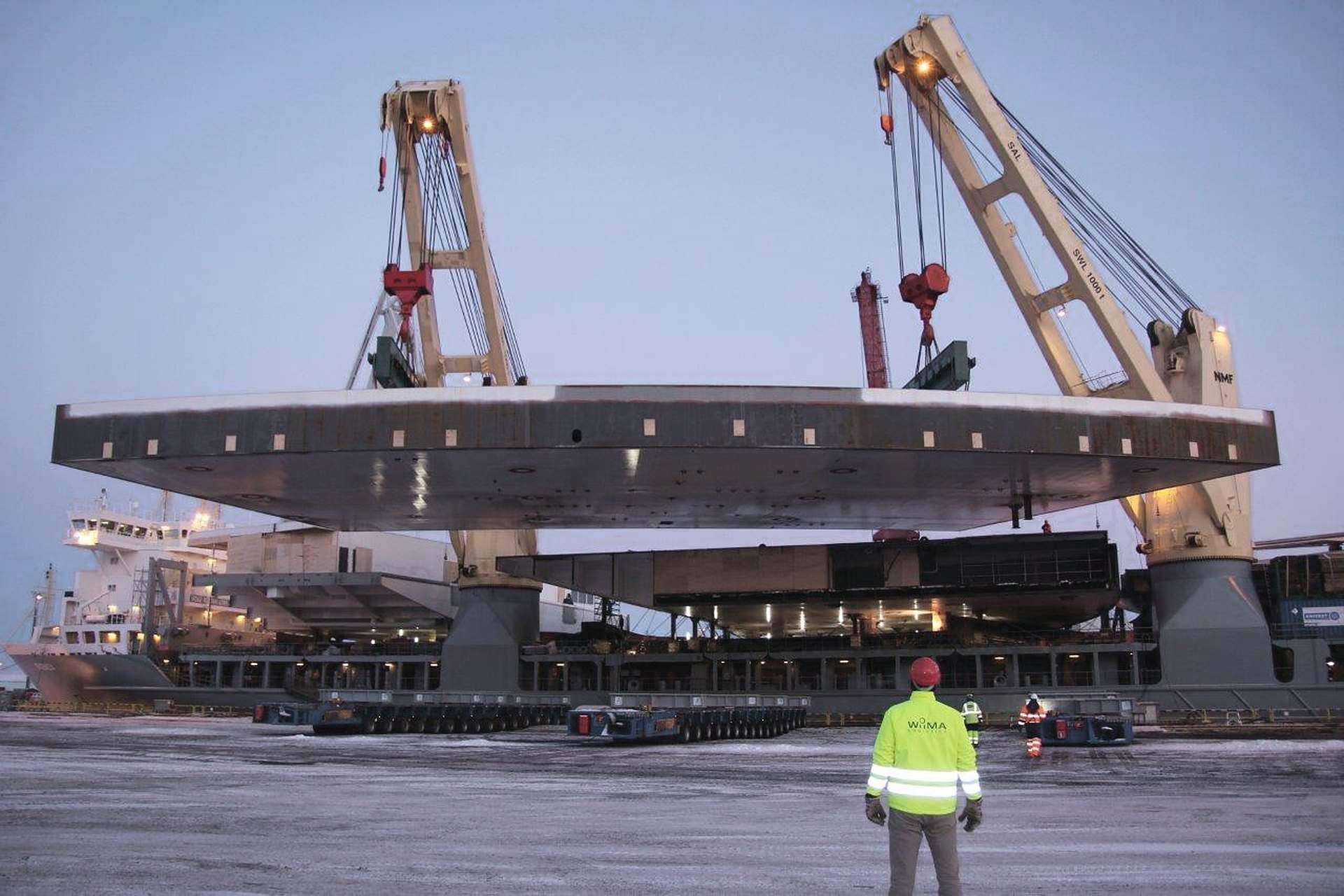
Shipbuilding in Europe is a multi-year process involving thousands of components, dozens of suppliers and tightly coordinated timelines. From Northern shipyards in Finland to Mediterranean sites in Italy or France, success depends on precision and predictability.
What makes new build projects so demanding?
Thousands of parts, dozens of suppliers
Each element must arrive at the right time and in the right sequence.
Long timelines with critical milestones
Delays in early phases can impact downstream assembly and sea trials.
Storage and handling coordination
On-site delivery windows are tight, and early material must often be managed off-site.
How Wiima delivers value in European new builds
End-to-end logistics digitally controlled and tailored to European shipyards:
- Planning, routing and budget tracking from day one
- Pre-assembly warehousing and consolidation with repacking options
- Stage-based material flow planning to match the build sequence
- Milestone-aligned freight scheduling, including just-in-time deliveries
- Documentation and customs management
- On-site logistics coordinators, available upon request
- Projector: visibility, alerts and supplier task tracking
Why customers work with Wiima
- Better milestone adherence
- Simplified supplier communication
- Fewer delays and unplanned costs
- A single platform to manage the supply chain
A real example: coordinated complexity
In a recent European new build, Wiima coordinated shipments from suppliers across multiple countries against a tight build schedule. Using Projector, each part was tracked to its build phase, with on-time delivery to the right section of the yard.
How European new builds compare globally
European shipyards are highly structured and technologically advanced — but logistics coordination remains critical. Supplier ecosystems are often multinational, and delivery windows are tight. Wiima helps keep the flow on plan, even when plans change.
New build – APAC
Building vessels in Japan and South Korea demands precise logistics execution — from supplier factory to final installation. Wiima coordinates the flow with dedicated logistics coordinators, a global partner network and local execution expertise.
What makes new build projects in APAC so demanding?
High-density yard operations
Material deliveries must be timed precisely to help avoid congestion.
Multinational supply chains
Components are often sourced globally and consolidated regionally.
Time-sensitive installation schedules
Yard slots for major installations are limited and must not be missed.
How Wiima delivers value in APAC new builds
Regional experience and digital tools so every logistical element supports the build schedule:
- Timeline-driven routing, supplier planning and budget tracking
- Regional consolidation hubs for multi-origin shipments
- Just-in-time delivery scheduling for congested shipyard zones
- Documentation and customs alignment for regional flow
- On-site logistics coordinators, when required
- Projector for project-level oversight, alerts and part tracking
Why customers work with Wiima
- Higher schedule integrity
- Less supplier follow-up burden for the client
- Regional coordination across multiple countries
- One system, one partner, clear transparency
A real example: orchestrating a multi-country flow
In a new build centred in Japan, Wiima managed synchronised component flows from Korea, Germany and the US. Through Projector, shipments were tracked live and sequenced to match the yard’s installation timeline.
How APAC builds compare globally
Compared with Europe or the Americas, shipbuilding in Japan and South Korea emphasises timing precision, spatial efficiency and structured yard operations. Wiima bridges global supply chains and localised execution.
New build – China
Building a vessel in China offers scale and manufacturing capability — and some of the most specific logistics requirements in global shipbuilding. From early customs declarations to detailed import control, success hinges on knowing the rules before the project starts.
What makes new build projects in China so demanding?
Mandatory pre-approved cargo lists
A full list of expected shipments must typically be submitted before the project starts — unlike in most regions.
Special customs via yard bonded accounts
Materials are imported under yard-specific customs regimes — often tax-exempt but highly structured.
Used tool import challenges
Even basic work tools may require special declarations or be restricted.
Numerous import restrictions
Certain components, materials or brands may be limited without a predefined plan.
How Wiima delivers value in China new builds
Proactive, localised and digitally structured via Projector:
- Cargo list validation and submission support before project kickoff
- Bonded zone coordination with yard-side customs channels
- Handling of tool import declarations and regulatory documentation
- Multi-country consolidation and staging of shipments
- Time-phased delivery planning to match on-site build progress
- On-site logistics coordination, if needed
- Projector syncing shipments, documents and compliance status
Why customers work with Wiima
- Fewer customs risks and project delays
- Proactive handling of regulatory bottlenecks
- Local experience combined with global transparency
- One platform for logistics and documentation oversight
A real example: from approval to arrival
In a Chinese yard project, Wiima handled the customs process for over 150 line items — pre-cleared months before the first delivery. Special permissions for importing used installation equipment — typically blocked by default — helped keep build-phase work uninterrupted.
How China builds compare globally
China typically requires the most proactive and detailed customs preparation of any shipbuilding region. Where Europe or the US allow shipment-by-shipment declarations, China often requires the material flow to be registered in advance through the shipyard’s bonded book. Wiima helps clients plan for this and execute it as planned.